If you are weighing a waterfront estate against an inland luxury home in Coral Gables, the price tag alone will not tell you the full story. These two property types often sit in the same broad luxury market, but they deliver value in very different ways. When you understand how access, land, architecture, and future flexibility shape pricing, you can make a smarter decision with fewer surprises. Let’s dive in.
Coral Gables Is a Two-Tier Luxury Market
Coral Gables is not one simple luxury market. In MIAMI Realtors’ October 2025 million-dollar market summary, the city posted a $2.29 million median home sales price, with 54% cash sales, 7 months’ supply, and 67 days on market. In the Q4 2025 Elliman report, single-family homes showed a $1.915 million median sales price and a $3.927 million average sales price.
Those numbers matter because they show how broad the market really is. Many homes trade in the low-to-mid-million range, while the true trophy tier starts much higher. In the same Elliman report, the top 10% luxury single-family segment began at $7.5 million and carried a $11.7 million median.
This is where waterfront and inland homes begin to separate. At the lower end of luxury, they can overlap. At the top end, waterfront homes often pull away because buyers are paying for scarce frontage, dock potential, and boating access, not just square footage.
Waterfront Value Starts With Access
A waterfront address in Coral Gables does not always mean the same thing. The city says its waterways connect to Biscayne Bay, and most waterways are navigable by boat. It also notes that Coral Gables has more than 42 miles of scenic shoreline.
But access is not uniform. The city’s waterways information shows bridge clearances ranging from 7 feet at some crossings to 21 feet at Isla Dorada. That means your route to the bay, your boat height, and even your intended use can matter as much as the home’s location.
In practical terms, two homes with water behind them may offer very different ownership experiences. One may support easier open-bay boating, while another may be limited by bridge clearance. That difference can have a major impact on both lifestyle and resale value.
What Buyers Pay For on the Water
With waterfront homes, value is tied to more than a view. Buyers often pay a premium for features such as:
- Water frontage length
- Private dock setup
- Bridge-free or bridge-limited bay access
- Water depth
- Seawall condition
- Boat lift capacity
The key takeaway is simple. Waterfront value comes from usable access, not just the presence of water. A home with favorable routing and stronger marine infrastructure may command much more than one with more limited boating functionality.
Waterfront Ownership Requires More Due Diligence
Coral Gables says the city is particularly susceptible to flooding from major rain events and storm surge. That makes flood review an important part of any waterfront purchase. It is not enough to admire the lot and the view. You also need to understand how the property performs from a risk and cost standpoint.
The city states that standard hazard insurance does not cover flood damage. It also notes that flood insurance is required for federally regulated mortgages in flood zones. Pricing under Risk Rating 2.0 depends on factors such as proximity to coasts, canals, rivers, and lakes, as well as first-floor height and rebuild cost.
For newer projects and major upgrades, the city says elevation certificates are required for new construction and substantial improvements. Shoreline work, including docks, seawalls, and bulkheads, also requires city review and mangrove compliance. If you plan to improve a waterfront property, these review layers can shape both your budget and your timeline.
Questions to Ask Before Buying Waterfront
Before you move forward on a waterfront luxury home, ask:
- Is the route to Biscayne Bay no-bridge or bridge-limited?
- What are the bridge clearances on the route?
- What flood zone is the property in?
- What is the first-floor elevation?
- What condition are the dock and seawall in?
- Will planned shoreline work require city review?
These questions can help you compare two seemingly similar homes in a more useful way. They also help you avoid paying a premium for features that may not work for your actual boating or ownership goals.
Inland Luxury Homes Offer Different Strengths
Inland luxury homes in Coral Gables often trade direct water access for a different set of advantages. These homes can offer more usable land, mature trees, architectural character, and a quieter residential feel. For many buyers, that mix creates a different kind of prestige.
The city’s public works department says Coral Gables manages an urban forest with more than 40,000 trees and 380 green spaces. That canopy is a real part of the inland experience. It can shape privacy, curb appeal, and the overall feel of a property in a way that is hard to duplicate.
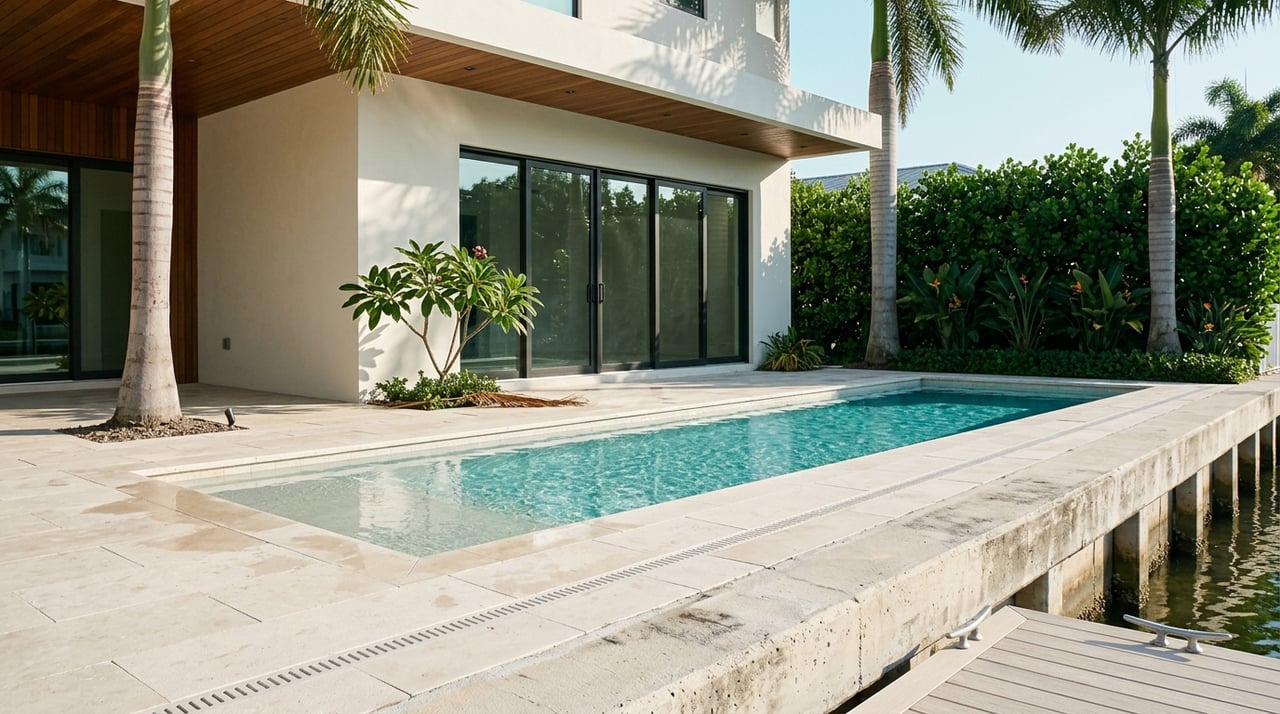
Current examples in the market also show the pattern. Inland luxury listings can feature sizable lots, new construction, oversized gardens, and pools without direct water frontage. In many cases, the appeal lies in how the home sits on the land and how the outdoor space functions day to day.
Architecture Plays a Bigger Role Inland
Architecture is a major value driver for inland homes in Coral Gables. The city’s historical resources information highlights strong ties to Mediterranean Revival and coral-rock architecture. The Board of Architects exists to help keep development aligned with city regulations and traditional aesthetics.
That means inland value is often shaped by more than size. Buyers may place a premium on original architectural character, thoughtful renovations, and homes that feel consistent with the city’s design identity. In some cases, the quality of the renovation can matter more than the total square footage.
This also means you should look carefully at what can and cannot be changed. The Historic Preservation division uses Certificate of Appropriateness and other review processes when applicable, and certain projects may face added oversight.
Remodeling and Rebuilding Can Be More Complex Than It Looks
An inland home may look like an easy remodel or teardown opportunity, but the review path can be more layered than buyers expect. Coral Gables requires tree surveys and tree-protection plans for certain Board of Architects submissions and demolition permits. If a lot has mature canopy or a home falls under design or historic review, your options may narrow.
This does not mean inland homes are less attractive. It means future flexibility should be evaluated early. If your plan includes expanding, rebuilding, or substantially reworking the house, it is wise to study the review framework before you treat the property like a blank slate.
Questions to Ask Before Buying Inland
If you are considering an inland luxury home, ask:
- Is the property subject to Board of Architects review?
- Is any historic review likely to apply?
- Will tree surveys or tree-protection plans be required?
- How much of the lot is truly usable?
- Is the home’s value driven more by land, architecture, or renovation quality?
These questions can help you understand whether you are buying a finished lifestyle product, a land play, or a longer-term improvement opportunity.
Lot Value Matters in Both Categories
One of the most important ideas in Coral Gables is that the lot itself can be a major part of the price. MIAMI Realtors’ 2025 land report said Coral Gables residential land sold at a median of $433 per square foot. That made it one of South Florida’s most expensive residential land markets.
This is why you should avoid treating the house as the whole story. In many cases, the site may be doing a large share of the value work. That is especially true when the structure is dated, undersized, or no longer aligned with current luxury demand.
For waterfront homes, lot value often centers on frontage, water access, dock potential, and marine conditions. For inland homes, lot value often centers on size, privacy, tree canopy, street setting, and how easily the structure can be updated or replaced.
How to Compare Waterfront vs Inland
If you are deciding between the two, the best approach is to compare lot value and structure value separately. That lens helps you see past cosmetic finishes and focus on what is truly scarce.
Here is a practical side-by-side view:
| Feature | Waterfront Luxury Homes | Inland Luxury Homes |
|---|---|---|
| Main scarcity | Frontage and water access | Land, canopy, and architectural character |
| Lifestyle driver | Boating and bay connectivity | Privacy, gardens, and flexible outdoor living |
| Key due diligence | Flood exposure, elevation, seawall, dock, bridge clearance | Design review, historic review, tree rules, renovation limits |
| Value focus | Access quality and marine infrastructure | Lot quality, renovation quality, and redevelopment potential |
Neither option is automatically better. The right fit depends on how you live, how you plan to use the property, and whether you value boating access more than land flexibility and architectural setting.
The Bottom Line for Coral Gables Buyers
Coral Gables waterfront and inland luxury homes are both prestige products, but they monetize different kinds of scarcity. Waterfront homes tend to command premiums for access, frontage, and boating function. Inland homes often derive value from lot quality, tree canopy, architectural identity, and the potential to shape the property over time.
If you are buying in this market, it helps to look beyond finishes and staging. The smarter comparison is not just waterfront versus inland. It is access versus flexibility, marine infrastructure versus architectural character, and immediate lifestyle versus long-term land value.
When you want a clear, discreet analysis of Coral Gables luxury opportunities, Brosda and Bentley Realtors can help you evaluate each property with the level of detail this market deserves.
FAQs
What makes Coral Gables waterfront luxury homes more expensive?
- Waterfront homes often carry premiums because buyers are paying for scarce frontage, dock potential, and boating access, not just the house itself.
What should you check before buying a Coral Gables waterfront home?
- You should review bridge clearance, route to Biscayne Bay, flood zone, elevation, and the condition of the seawall and dock features.
Why do Coral Gables inland luxury homes appeal to many buyers?
- Inland homes often offer more usable land, mature tree canopy, architectural character, and flexibility for outdoor living without direct water frontage.
Can Coral Gables design rules affect a luxury home remodel?
- Yes. Depending on the property, Board of Architects review, historic review, tree surveys, and tree-protection requirements may affect renovation or demolition plans.
Why is land value so important in Coral Gables luxury real estate?
- MIAMI Realtors reported Coral Gables residential land at a median of $433 per square foot in 2025, which shows that the site itself can be a major driver of overall value.