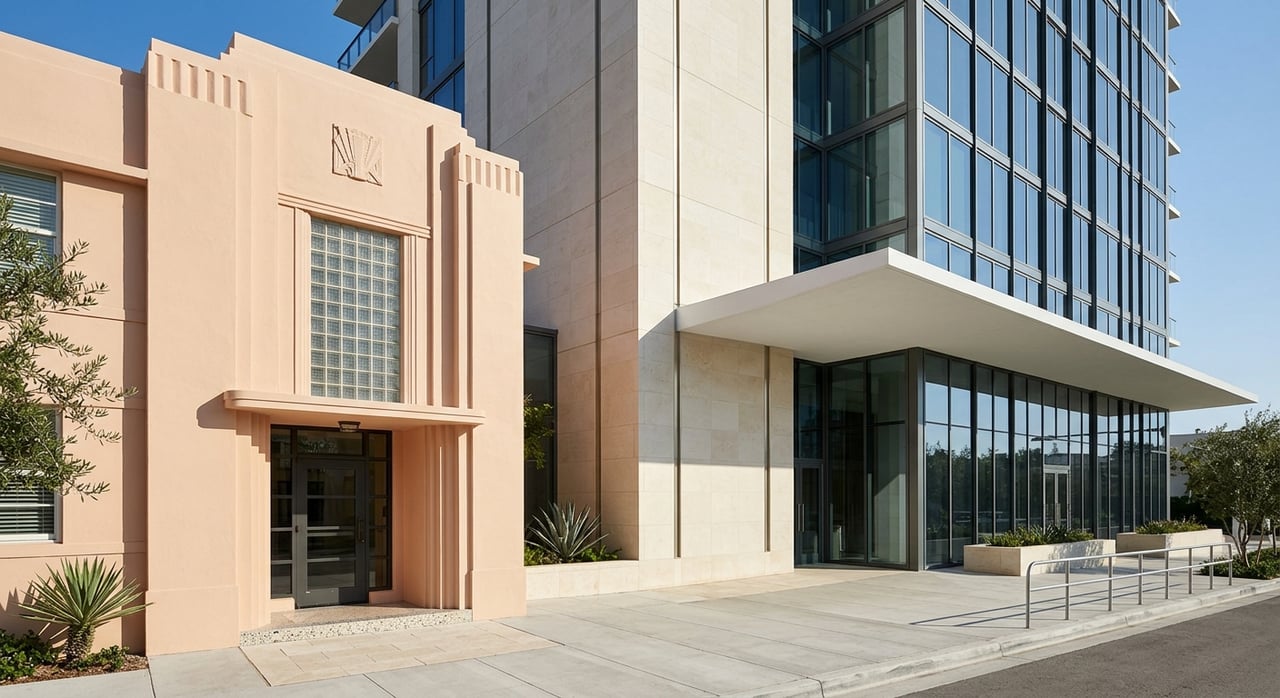
Miami Beach luxury is not one look. It is a layered design story, where pastel Art Deco buildings, postwar MiMo landmarks, and sleek glass towers each create a very different way to live. If you are buying, selling, or investing here, understanding those differences can help you match the property to your lifestyle goals and make sharper decisions in a competitive market. Let’s dive in.
Miami Beach Luxury Starts With Style
In Miami Beach, architecture does more than shape a skyline. It influences how a home feels, how a neighborhood functions, and what buyers often value most.
At the highest level, luxury living here tends to fall into three distinct categories. You will see Art Deco in South Beach, MiMo in Mid-Beach and North Beach, and contemporary glass towers along prime oceanfront stretches. Each one offers a different mix of scale, privacy, character, and amenities.
Art Deco Living in South Beach
South Beach is home to the world’s largest collection of Art Deco buildings, with more than 800 properties built between 1923 and 1943. The Miami Beach Architectural District was added to the National Register of Historic Places in 1979, and the city says its historic districts include more than 2,600 buildings, with 70% considered contributing or historic.
This style is easy to recognize. Art Deco buildings often feature symmetry, geometric lines, pastel or bright colors, and decorative details like sunbursts and zigzags. Materials such as terrazzo, neon, glass block, chrome, and concrete help define the look.
For you as a buyer, Art Deco often means a more boutique living experience. Many preserved buildings were originally hotels, apartment buildings, or stores, so the housing stock can feel compact and character-rich rather than oversized or heavily amenitized.
South Beach also has a distinct day-to-day rhythm. The city describes it as a small, chic neighborhood between Biscayne Bay and the Atlantic, with strong pedestrian access supported by the Beachwalk and the trolley system. If you want architecture as identity and a lively street setting, this style and location often stand out.
What Art Deco Buyers Should Expect
If you are drawn to Art Deco, the appeal is often emotional as much as practical. You are usually choosing:
- Historic design character
- Boutique scale
- Walkable surroundings
- Strong visual identity
- A preservation-focused setting
That last point matters. In Miami Beach’s local historic districts, demolition, alterations, and new construction may require review through the city’s preservation process. If you are considering updates, it is important to understand how those rules may affect design changes and timelines.
MiMo Style in Mid-Beach and North Beach
Miami Modern, often called MiMo, emerged after World War II and became especially prominent from the late 1940s through the 1960s. The city describes the style as sleek and futuristic, shaped by postwar optimism, tourism, and resort culture.
MiMo buildings are known for bold lines, open spaces, curved rooflines, large windows, geometric forms, glass block, neon, and terrazzo. In Miami Beach, most MiMo properties are found in Mid-Beach and North Beach, where there was more land available during the postwar buildout.
Compared with Art Deco, MiMo often feels airier and more relaxed. The style leans into openness and tropical design elements, which can create a stronger indoor-outdoor feel and a more resort-oriented atmosphere.
Mid-Beach: Grand Hotels and Glamour
Mid-Beach is closely associated with Millionaire’s Row, Morris Lapidus architecture, and large historic hotels. The city presents the area as culturally rich and visually tied to classic Miami Beach glamour.
For you, that often translates into a luxury experience that feels quieter than South Beach but still highly polished. Mid-Beach can appeal if you want oceanfront presence, larger-scale buildings, and a setting that feels refined without the same level of street intensity.
North Beach: Residential Feel and Growth
North Beach offers a different version of luxury. The city describes it as relaxing and welcoming, with open beach, parks, winding walkways, tree canopies, and a mix of historic and modern architecture.
It also has an active redevelopment story. City messaging and the North Beach CRA describe the area as having limited housing stock, new development activity, and planned mixed-use, hospitality, and public-space improvements. If you like MiMo character but want a more neighborhood-first setting, North Beach may deserve a closer look.
Glass Towers and Contemporary Luxury
At the newest end of the market, Miami Beach luxury often takes the form of contemporary glass towers. These buildings focus on views, privacy, and a dense amenity package designed around service and comfort.
Official project examples in the market highlight features such as floor-to-ceiling windows, deep terraces, flow-through layouts, private elevator entries, ocean frontage, resident-only dining or club spaces, wellness amenities, and direct beach access. The result is a very different living experience from a historic boutique building.
If Art Deco is about personality and MiMo is about resort-era charm, glass towers are about seamless modern living. They tend to prioritize open-plan entertaining, wide sightlines, and a stronger sense of separation between private home life and the public world outside.
What Contemporary Buyers Often Value
In this segment, buyers are often looking for a specific set of lifestyle features:
- Expansive water views
- Larger floor plans
- Oversized terraces
- Private arrival experiences
- Wellness and hospitality-style amenities
- Direct beach or oceanfront access
For many high-end buyers, this is the most turnkey version of Miami Beach luxury. It can be especially appealing if you want modern construction, lock-and-leave convenience, or a residence that supports entertaining at a high level.
How the Three Styles Compare
The best choice depends on what matters most to you. In Miami Beach, “luxury” can mean heritage, atmosphere, privacy, or service, depending on the building and location.
| Style | Typical Feel | Common Appeal |
|---|---|---|
| Art Deco | Boutique, iconic, walkable | Historic character and design identity |
| MiMo | Airy, retro-modern, resort-like | Openness and classic Miami Beach glamour |
| Glass Towers | Sleek, private, service-driven | Views, amenities, and modern layouts |
This is why style should never be treated as just aesthetics. It directly affects your living experience, future renovation flexibility, and the type of buyer who may be most interested when it is time to sell.
What Buyers Should Think About First
Before you focus on finishes or views alone, start with how you want to live in Miami Beach. The right architectural era usually becomes clearer once you define your priorities.
Ask yourself:
- Do you want historic charm or contemporary convenience?
- Is walkability more important than a full amenity package?
- Do you prefer a boutique building or a tower with extensive services?
- Are you comfortable with possible preservation review if updates are needed?
- Do you want a socially active area, a resort-like setting, or a more residential feel?
These questions can quickly narrow the field. They also help you compare homes more intelligently across South Beach, Mid-Beach, and North Beach.
What Sellers Should Keep in Mind
If you are selling in Miami Beach, your home’s architectural style is a core part of its market story. Buyers are not just purchasing square footage. They are buying into a version of Miami Beach living.
That means presentation and positioning matter. A historic Art Deco residence should be marketed through its design identity and location context, while a modern tower residence should lean into privacy, views, amenities, and turnkey ease.
For luxury sellers, this is where boutique strategy can make a difference. Clean visual storytelling, polished photography, and precise neighborhood context help connect your property with the right buyer profile, especially in a market where local and international demand often intersect.
Why Local Guidance Matters in Miami Beach
Miami Beach looks compact on a map, but the lifestyle differences between South Beach, Mid-Beach, and North Beach are meaningful. So are the differences between a preserved historic building and a newly built tower.
That is why local guidance matters, especially at the luxury level. You need more than a list of available properties. You need clear advice on neighborhood fit, architectural tradeoffs, property positioning, and how each style aligns with your goals as an owner or investor.
Whether you are looking for historic charm, resort-era glamour, or modern oceanfront privacy, the right strategy starts with understanding how Miami Beach luxury actually lives. To explore the style and location that fit you best, schedule a private consultation with Brosda and Bentley Realtors.
FAQs
What defines Art Deco luxury living in Miami Beach?
- Art Deco luxury living in Miami Beach is defined by historic architecture, boutique-scale buildings, geometric design details, pastel palettes, and a highly walkable setting that is especially associated with South Beach.
What is MiMo architecture in Miami Beach?
- MiMo, or Miami Modern, is a postwar architectural style known for bold lines, open spaces, curved rooflines, large windows, and a resort-influenced feel that is most common in Mid-Beach and North Beach.
What makes Miami Beach glass towers different from historic buildings?
- Contemporary glass towers typically offer larger layouts, floor-to-ceiling windows, oversized terraces, private elevator entries, and more extensive resident amenities than older historic buildings.
Which Miami Beach area feels most residential?
- Based on current city messaging, North Beach is generally described as the most residential-feeling area, with open beach, parks, walkways, tree canopies, and a mix of historic and modern properties.
Do historic Miami Beach properties have renovation rules?
- Yes. If a property is located within one of Miami Beach’s local historic districts, demolition, alterations, and new construction may require review under the city’s historic preservation framework.
How do South Beach, Mid-Beach, and North Beach differ for luxury buyers?
- South Beach is most associated with Art Deco identity and street-life energy, Mid-Beach with grand-hotel glamour and quieter luxury, and North Beach with a neighborhood-first setting and MiMo character.
Is Miami Beach easy to get around without driving everywhere?
- Miami Beach says the Beachwalk runs the full length of the city, and free trolleys connect South Beach, Mid-Beach, and North Beach, which helps tie the island together.
What should luxury sellers highlight in a Miami Beach listing?
- Luxury sellers should highlight the property’s architectural style, neighborhood context, lifestyle benefits, and distinguishing features such as character, views, privacy, amenities, or preservation significance.