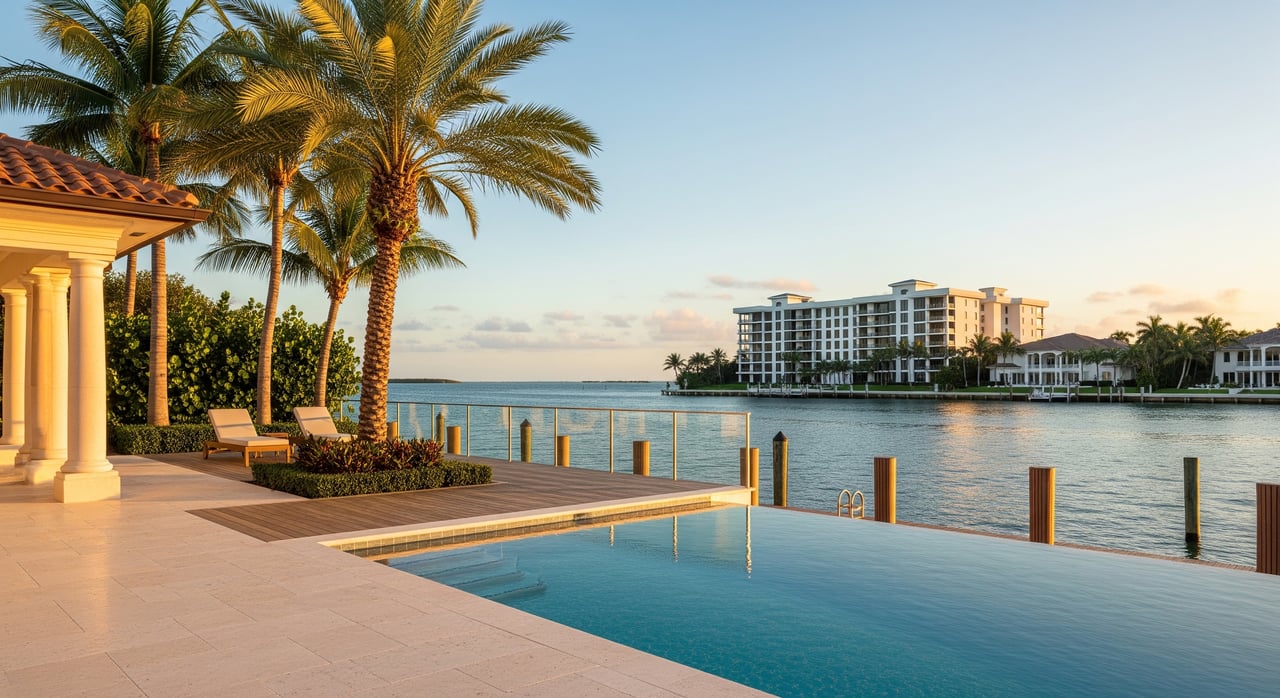
Torn between a waterfront condo and a private estate in Palm Beach? You are deciding not just on a property, but on a lifestyle, ownership structure, and long-term risk profile. This guide distills the tradeoffs so you can choose with clarity. You will get a simple scoring tool, a due diligence checklist, and local context shaped for high-net-worth second-home buyers. Let’s dive in.
Palm Beach market context
Palm Beach is a narrow barrier island known for trophy single-family waterfront estates on both the ocean and Intracoastal. Parcels are scarce, frontage is prized, and the island’s historic character attracts global capital. Inventory for true trophy estates is limited, which can influence liquidity and pricing dynamics over time.
The broader West Palm Beach–Boca Raton–Delray Beach area offers more variety. You will find full-service oceanfront towers, boutique mid-rises, waterfront townhomes, and gated single-family estates on the Intracoastal and canal systems. Many buyers are seasonal residents from the United States and abroad who value beach access, boating, security, and Florida’s tax advantages.
Ownership and cost differences
How you own it
Single-family estates typically convey fee simple ownership. You can customize the property, add structures subject to local rules, and hold title in an entity if desired. Many international buyers and privacy-focused owners consider entity ownership for liability and estate planning, and they should consult qualified advisors.
Condominiums give you title to the unit plus an undivided interest in common elements. The association generally maintains building systems, exterior structures, and shared waterfront infrastructure where applicable. Review association documents to understand exactly what the master policy covers and where your responsibilities begin.
Financing at the luxury level
Lenders underwrite condos and single-family homes differently. Condo financing depends on project eligibility and building-level underwriting. Smaller or highly customized buildings may require additional scrutiny. Foreign nationals often face higher down payment requirements and many elect to purchase with cash. Appraisals for waterfront assets should account for dock rights, seawalls, and water depth.
What carrying costs include
- Estates: property taxes, homeowners insurance with wind coverage, flood insurance if required, landscaping, pool and mechanicals, utilities, housekeeping or staff, and security systems. There are no association fees, but you fund all capital projects and repairs.
- Condos: property taxes, association fees that fund building operations, reserves, staff, amenities, and master insurance for common elements. You will likely add an HO-6 policy for interior finishes. Plan for potential special assessments for major projects such as concrete restoration, elevators, or seawalls.
Taxes you should plan for
Florida has no state income tax, which is attractive for many buyers. The homestead exemption generally applies only to primary residences, so most second homes will not receive it. Deed documentary stamp taxes apply at closing, and parties negotiate who pays. For accurate non-homestead property tax projections, consult the Palm Beach County Property Appraiser and your closing team.
Lifestyle and amenity tradeoffs
Privacy and space
Estates offer horizontal privacy, private yards, custom pools, separate guest quarters, and the flexibility to design a compound that suits your lifestyle. You control how the site lives and feels. The tradeoff is active management to keep everything running at a high standard.
Condos concentrate living vertically. Luxury towers can deliver quiet interiors, private elevator foyers, and limited-access floors. You still share walls and common areas, so privacy is different in nature rather than absent.
Amenities and convenience
Condos deliver convenience. Expect concierge, valet, on-site security, fitness, spas, pools, and sometimes on-site dining or marina facilities. Landscaping, exterior systems, and common-area HVAC are handled for you. This suits a lock-and-leave lifestyle.
Estates let you create bespoke amenities such as large pools, gardens, gyms, and expansive docks. You can host larger private events subject to local rules. Achieving the same day-to-day ease as a staffed building usually requires service providers or dedicated personnel.
Security and community
Condos benefit from staffed entries, monitored systems, and a resident community with events and social interaction. Many buyers value the integrated security and services.
Estate security depends on your solutions. Gated entries, camera systems, and private security staff are common for high-value homes. You gain seclusion and control, with the responsibility to manage it.
Boating and marina access
For any waterfront choice, verify dock type, permitted vessel size, water depth, and proximity to inlets such as the Lake Worth Inlet for ocean access. In a condo, slips may be deeded or leased and governed by association rules. Estates often support larger vessels and private lifts, with the owner responsible for seawall and dock maintenance.
Renting and investment use
Condo rental policies vary widely. Luxury buildings often limit rental frequency to preserve resident experience. If you plan to rent, confirm minimum lease terms, caps, and approval processes.
Single-family estates can be more flexible, subject to local ordinances and neighborhood covenants. Verify municipal short-term rental rules in the Town of Palm Beach or surrounding cities before you rely on rental income.
Risk, resilience, and insurance
Flooding and elevation
South Florida faces sea-level rise, tidal flooding, and storm surge risk. Check FEMA flood zone, Base Flood Elevation, and obtain an elevation certificate where applicable. Higher finished-floor elevations, newer seawalls, and documented flood mitigation can improve resilience and influence insurance pricing.
Wind and hurricane coverage
Insurance premiums for waterfront property can be significant. Condo associations carry master hazard policies for structures and common elements, while unit owners cover interiors and personal property. Associations may levy assessments to cover hurricane deductibles. Estate owners need comprehensive policies with wind endorsements and, if applicable, separate flood coverage. Deductibles are often percentage-based and can be substantial.
Seawalls, docks, and permits
Seawall and dock condition directly impact safety, insurance, and long-term costs. Review permits, engineering reports, and maintenance history. In condos, confirm association responsibility, reserves set aside for marine structures, and any planned capital projects.
Environmental and historical rules
Coastal construction zones, setback regulations, and historic district rules can limit alterations. Confirm boundaries, approvals required, and timelines before you plan major improvements.
A simple way to choose
Quick self-assessment
Score how strongly you value each factor on a 1 to 5 scale.
- Privacy and space
- Convenience and services
- Time on site: short, frequent visits or longer seasonal stays
- Maintenance appetite
- Boating needs: vessel size and dock control
- Security expectations
- Tax and estate planning priorities
- Resale and liquidity needs
- Environmental risk tolerance
Palm Beach scoring exercise
- Use 1 to 5 for each criterion. A score of 1 leans toward a condo and a score of 5 leans toward an estate.
- Weight what matters most. For example, if boating is essential, assign it 30 percent of your total score and reduce other weights accordingly.
- Multiply each score by its weight and add them up. Lower totals suggest a condo, higher totals suggest an estate.
- Revisit your scores after touring a few options. Real-world showings often clarify priorities.
Due diligence checklist for any waterfront buy
- Title and access: confirm title, easements, dock rights, and any shoreline encumbrances.
- Flood and elevation: FEMA zone, elevation certificate, past flood claims, and compliance with current standards.
- Insurance: obtain quotes for wind and flood coverage. For condos, review master policy, deductibles, and any special assessments tied to storms.
- Association review: bylaws, reserves, minutes, insurance certificates, rental rules, litigation disclosures, and planned capital projects.
- Reserve adequacy: confirm funding for roof, facade, mechanicals, seawall, and elevators.
- Systems and structure: engage inspectors and a marine engineer for roof, foundation, seawall, dock, HVAC, pool, electrical, and plumbing.
- Dock and marina: permitted vessel size, water depth, maintenance allocations, and permit history.
- Permits and compliance: verify permits for past renovations and check for open violations.
- Local regulations: confirm municipal rules on rentals, waterfront ordinances, and any coastal construction lines.
- Taxes and financing: review non-homestead tax assessments, lender requirements for condos vs estates, and cross-border tax considerations with qualified advisors.
- Market comparables: analyze recent condo and estate sales in your micro-market to gauge liquidity and potential hold periods.
Pros and cons at a glance
Condos
- Pros: convenience, integrated services and security, on-site amenities, lower day-to-day maintenance.
- Cons: special assessments, limited customization, potential rental restrictions, neighbor proximity.
Estates
- Pros: maximum privacy and customization, larger private docks, ability to host private events, land control.
- Cons: higher hands-on management, higher insurance and carrying costs, potentially longer resale timelines.
How we help you decide
You deserve a clear, strategic path to the right Palm Beach waterfront asset. As a boutique, founder-led firm, we combine senior advisory with full-lifecycle capabilities that matter to high-net-worth and international buyers. That includes guidance on financing options, property management resources, cross-border acquisition support, and precise neighborhood intel across Palm Beach and the surrounding metro.
If you want a discreet, data-backed conversation tailored to your priorities, connect with Brosda and Bentley Realtors. Schedule a Private Luxury Consultation.
FAQs
What is the key ownership difference between Palm Beach condos and estates?
- Condo buyers own their unit and a share of common elements managed by an association, while estate buyers typically own the land and improvements directly and handle all maintenance.
How do condo special assessments affect my costs in Palm Beach waterfront buildings?
- Special assessments can arise for major projects like concrete restoration, elevators, or seawalls and are paid by unit owners in addition to regular association fees.
How do hurricane and flood insurance needs differ for condos vs estates?
- Condo associations insure structures and common areas, while you insure interiors; estate owners insure the entire property and often carry separate flood policies with percentage-based hurricane deductibles.
What should I verify about docks and boating access before buying?
- Confirm permitted vessel size, water depth, proximity to the Lake Worth Inlet for ocean access, dock maintenance responsibility, and current permits or encumbrances.
Can I rent out a Palm Beach waterfront property as a second home?
- Condo rental rules vary by association and may limit frequency, while estates can be more flexible but must comply with municipal regulations and neighborhood covenants.
What should international buyers consider when purchasing in Palm Beach?
- Review ownership structures for privacy and estate planning, confirm financing options and banking logistics, and consult cross-border tax counsel on U.S. rules before you proceed.