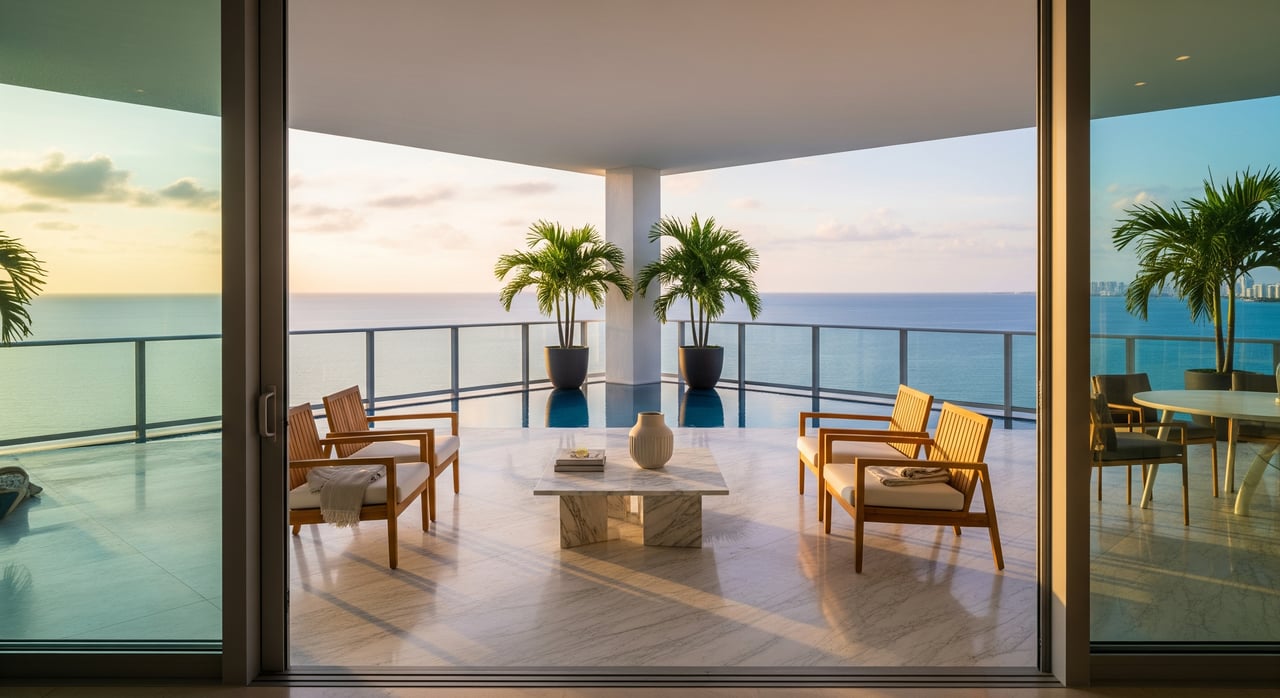
Are you wondering what your Sunny Isles Beach oceanfront condo is really worth today? Pricing in 33160 can feel tricky because two units in the same tower can sell for very different numbers. You want a price that attracts qualified buyers without leaving money on the table. In this guide, you will learn the exact factors that move prices, a clear step-by-step way to set value, and the key due diligence that protects your outcome. Let’s dive in.
What drives prices in 33160
Oceanfront and view tiers
Direct oceanfront views usually command the strongest premiums. A balcony that faces the Atlantic without obstructions often sells well above units with side or partial views. East-facing exposure typically ranks highest, followed by northeast or southeast, then lateral ocean peeks, with bay or city views generally below that. High floors add privacy and better sightlines that most buyers favor.
Building and amenities
Newer luxury towers with modern amenities often achieve higher prices per square foot than older buildings. Services like concierge, valet, security, spa, fitness, and private beach or club access add value. Brand reputation, developer pedigree, and day-to-day management quality matter because they shape buyer confidence and resale strength. Deeded parking and storage also carry real dollar value in many beachfront buildings.
Unit features that matter
Size, layout, and finish level are major price drivers. A fully renovated unit with quality materials will usually outperform an original-condition unit. Larger or glass-enclosed balconies add usable living space that buyers notice. Private elevator foyers, flexible dens, and well-planned bedroom counts broaden the buyer pool and support stronger pricing.
Carrying costs and rules
HOA fees, what those fees include, and any special assessments can move value. Higher monthly fees reduce purchasing power for many buyers, and investors will underwrite that cost into their returns. Rental policies are also important. Short-term permissions can increase appeal for some investors but may reduce desirability for others who want a quieter environment. Your pricing should reflect the buyer profile that your building naturally attracts.
Market and seasonality
Demand in 33160 tends to be seasonal, which can affect your pricing window and time on market. Inventory levels, recent closed sales, and list-to-close price ratios help you spot momentum. Nearby markets like Bal Harbour, Bay Harbor Islands, Surfside, and North Miami Beach provide useful context when same-building sales are limited.
Insurance and flood zones
Insurance costs affect carrying cost and buyer sentiment. Lenders usually require windstorm and flood coverage in coastal areas. FEMA flood zones and a building’s elevation can influence premiums and underwriting. These details do not just impact affordability. They can also shape how buyers compare your property to competing units.
How to price your condo
Define the right comps
Start as close as possible. If there were recent sales in your building within the last 3 to 6 months, those should lead. If inventory is thin, expand to the immediate set of similar towers built in the same era with comparable amenities. Match by bedroom count, bathrooms, square footage, and especially view category. Include only sales that a knowledgeable buyer would see as substitutes.
Make precise adjustments
Once you have 3 to 5 solid comparables, adjust for the factors that differ from your unit. Focus on view, floor, condition, balcony size, deeded parking, HOA fee differences, and date of sale. Illustrative ranges help frame expectations while you tailor exact amounts to your building’s data:
- View premium: direct oceanfront often prices about 10% to 40% higher than a non-ocean view, with partial ocean views commonly 5% to 15% above.
- Floor level: higher floors can add about 3% to 12% over mid-level floors. First-floor units without special outdoor space can see a discount of roughly 5% to 20%.
- Renovation quality: a full modern renovation can add about 10% to 30% versus original finishes.
- Balcony and outdoor living: larger or enclosed terraces can support a 3% to 10% premium.
- Deeded parking or storage: value varies by building. Use same-building sales with and without these assets to isolate the delta.
- HOA fee differences: translate the monthly difference into an annual cost and reflect it as a pricing adjustment based on buyer affordability or investor yield.
- Market timing: if the market has moved since a comp closed, apply a time adjustment aligned with recent local trends.
Reconcile to a price range
After adjustments, calculate a low, median, and high range across your comps. The low end appeals to speed and certainty. The high end aims for top dollar if you can afford longer market time and you have a clear edge such as a better view or new renovation. Most sellers choose a list price near the middle-to-upper range, depending on seasonality and current inventory pressure.
Cross-check with actives and pendings
Check active and pending listings in your building and nearby peer buildings. Pending listings reveal where buyers are engaging today. Active listings show the competition your property must beat on value and presentation. Use this cross-check to fine-tune your list price and staging plan.
Model your monthly cost
Price is only part of the story. Buyers will compare the effective monthly cost of ownership across options. Show the math clearly so you stand out as a transparent seller, or so you can make a confident offer as a buyer. A simple framework includes:
- Principal and interest if financed
- Taxes, with homestead eligibility if this will be your primary residence
- HOA fees and what they cover
- Insurance, including windstorm and flood where required
- Utilities that are not covered by the HOA
When you present or evaluate a condo, summarize the effective monthly cost alongside the price per square foot. Investors will also factor management, vacancy, and rental rules into net operating income. This clarity helps your unit compare more favorably against listings that only quote the asking price.
Seller strategy for top dollar
Present complete HOA documentation
Serious buyers and lenders want a clean picture of the building. Gather current financial statements, budgets, reserve studies, meeting minutes, rules, estoppel letters, insurance summaries, and any litigation or special assessment records. Full transparency builds trust, reduces surprises, and can support a stronger price.
Showcase the view and lifestyle
Your ocean view is a core value driver. Stage furniture to frame the water, declutter balconies, and schedule photos when light and water color are at their best. Premium production such as drone video, high resolution photography, and refined listing copy can push buyers to stretch into your range.
Time the market
Align your listing with peak local demand if your timing allows. Use recent absorption and days on market to gauge urgency. If new inventory is hitting your building or a neighbor tower, you may list slightly earlier with sharper positioning to lead the competition.
Buyer due diligence checklist
- Review HOA financial health. Read recent minutes, budgets, and reserve studies. Look for history of special assessments and pending litigation.
- Get insurance quotes early. Confirm windstorm and flood premiums and deductibles to understand true carrying costs.
- Verify lending path. Ensure the condominium project meets your lender’s requirements or have a portfolio lending plan if needed.
- Confirm rental rules. Check lease minimums, owner occupancy caps, and any short-term restrictions if rental income is part of your strategy.
- Check flood zone and elevation. Understand any mitigation features that can improve resilience and insurability.
Special cases and appraisals
Some oceanfront units are unique. Corner stacks, penthouses, private elevator lobbies, or major designer remodels can outpace recent comps. In these cases, consider a professional appraisal or a broker opinion to triangulate value. Present the features that support your premium clearly so appraisers and buyers can follow the logic.
Local data to watch
For Sunny Isles Beach and ZIP 33160, focus your data pull on:
- Closed sales in your building and immediate peers within the last 3 to 12 months
- Active and pending listings with days on market and list-to-close ratios
- Price per square foot trends for oceanfront units versus non-oceanfront
- Inventory and months of supply to gauge leverage
- HOA fee ranges among oceanfront buildings
- Property tax assessments and recent millage rates
- Rental data if allowed by your building, including advertised rents and typical occupancy
- New luxury tower deliveries that may add competing supply
Authoritative sources include the local MLS, the Miami-Dade Property Appraiser and Clerk, Miami Association of Realtors and Florida Realtors market reports, and City of Sunny Isles Beach regulations. FEMA flood maps, NOAA coastal data, and state insurance resources provide context on risk and carrying costs.
Work with a local advisor
Oceanfront pricing in 33160 is building specific and view driven. The right strategy starts with precise comps, careful adjustments, and a clear view of monthly costs, insurance, and HOA health. If you want a discreet, high-touch plan to price and present your condo or to acquire the right unit with confidence, our senior advisors are ready to help. Schedule your private consultation with Brosda and Bentley Realtors.
FAQs
How do I compare direct oceanfront vs partial views in Sunny Isles Beach pricing?
- Use recent same-building sales and apply a view premium. Direct oceanfront often commands about 10% to 40% over non-ocean views, with partial ocean views near 5% to 15%.
What HOA documents should I review before I buy an oceanfront condo in 33160?
- Review financial statements, budgets, reserve studies, meeting minutes, rules, estoppel letters, insurance summaries, and any litigation or special assessments.
How do HOA fees affect my condo’s value and buyer demand?
- Higher monthly fees reduce buyer affordability and investor yield. Translate fee differences to annual costs and reflect that impact in pricing or negotiation.
What financing issues are common with oceanfront condos in Miami-Dade?
- Lenders review project approval, reserves, occupancy ratios, and litigation. Some buildings may require portfolio loans or cash if they do not meet agency standards.
How should I time my listing for the Sunny Isles Beach market?
- Review months of supply, recent days on market, and upcoming competing listings. If seasonality favors demand soon, time your launch with premium presentation and clear positioning.