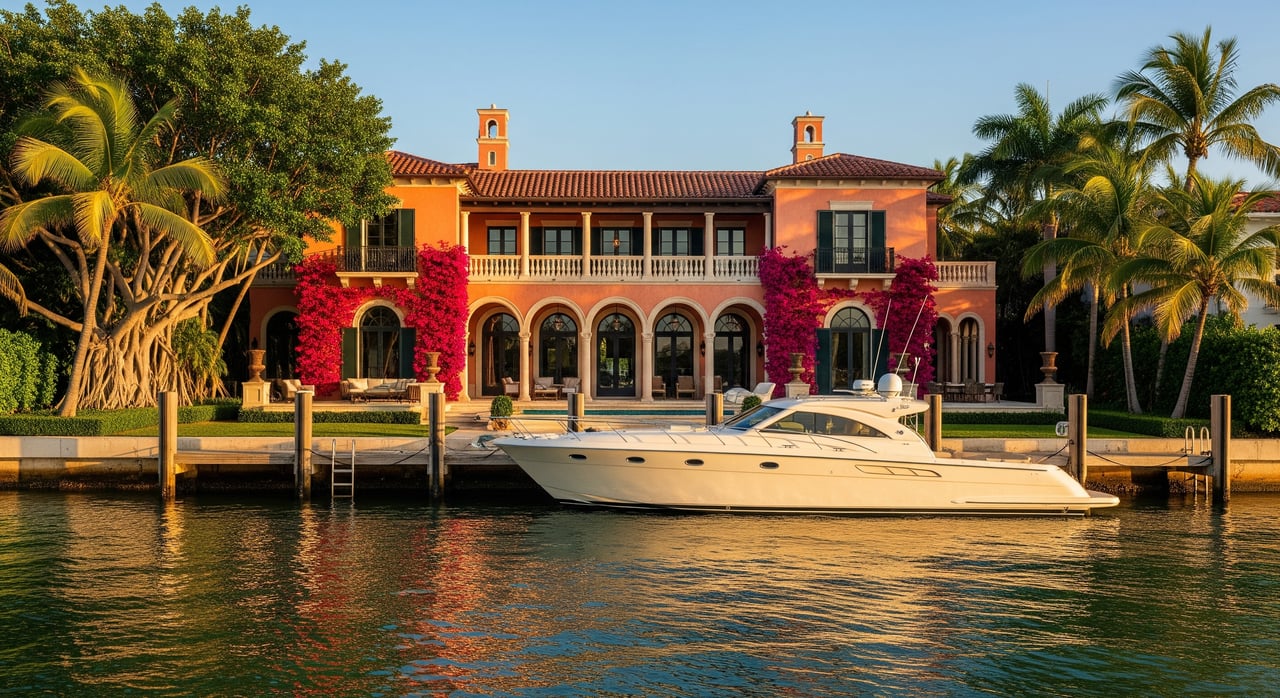
Looking at two Coral Gables waterfront homes and wondering why prices can differ by millions? You are not alone. From water depth to seawall condition, small differences on the water translate into big differences in value. In this guide, you will learn the exact features buyers pay for, the risks that pull prices down, and how waterfront homes are actually valued in Coral Gables. Let’s dive in.
Water type and access
Not all water is equal in Coral Gables. The type of water body and your access to open water are major price drivers.
- Open bay or direct Biscayne Bay access often carries the highest premium because of navigability, deep water, and wide views.
- Intracoastal access and deep, navigable canals follow, especially when you can reach open water without low bridges.
- Lakes and man-made lagoons can command strong prices when the view is wide and private, but boating value is limited.
Key questions to ask:
- What is the water depth at mean low tide for the desired boat size?
- Are there bridge height restrictions between the dock and open water?
- How long is the run to Biscayne Bay and are there no-wake zones that slow it?
Frontage, docking, and maneuverability
Buyers and appraisers look beyond total lot size to the water-facing edge.
- Linear water frontage. More usable linear feet typically means more room for docks, lifts, and easier boat handling.
- Usable frontage. Frontage that allows safe docking and turning is worth more than shallow or mangrove sections that limit use.
- Docking infrastructure. A permitted dock or boat lift in good condition, sized for your vessel, is a meaningful premium. Absence of low-bridge constraints is another value boost.
Tip: Verify any dock’s permits, capacity, and condition. Maintenance history and current load ratings matter when pricing and negotiating.
Views and orientation
Long, unobstructed water views and favorable orientation can separate a premium listing from the pack.
- Wide-water or long-canal sightlines sell faster and higher.
- Sunset or open bay exposures tend to draw stronger demand.
- Privacy matters. Fewer adjacent docks in your direct view can support a higher price.
Lot size, elevation, and buildability
Waterfront parcels vary widely, and buyers value flexibility.
- Larger lots with space for a pool, outdoor kitchen, and potential expansion carry a premium.
- Elevation and finished floor height relative to Base Flood Elevation influence insurance costs and long-term marketability. Higher or elevated homes are valued more.
- Zoning and setbacks affect how much you can add or elevate. Buildable potential often underpins buyer willingness to pay.
To confirm these details, review the parcel on the Miami-Dade County Property Appraiser and discuss zoning and setbacks with the city. You can start by searching property records on the Miami-Dade site through the Property Appraiser resource found at miamidade.gov, and review city planning guidance on the City of Coral Gables planning and permitting pages.
Seawalls, resilience, and condition
On the water, structural health is value.
- A newer or recently reinforced seawall with documentation reduces risk and future expense. A failing seawall is a liability that can move price materially.
- Hurricane-rated windows, flood vents, a whole-home generator, and hardened garage doors add resilience and support pricing.
- Expect engineering or contractor reports to be part of serious diligence for both buyers and lenders.
If you plan alterations to docks or seawalls, consult the county’s permitting guidance. Miami-Dade’s Department of Regulatory and Economic Resources lists seawall and dock permit requirements on the county website. You can review coastal permitting rules at the Florida Department of Environmental Protection and coordinate local approvals through Miami-Dade and Coral Gables.
Neighborhood context and scarcity
Coral Gables combines historic character and established waterfront enclaves. Location and scarcity matter.
- Established areas with waterfront access, such as parts of the Old Cutler corridor and communities like Gables by the Bay, benefit from limited supply and proximity to amenities.
- Street privacy, tree canopy, and closeness to marinas and yacht clubs can influence buyer demand.
- Historic designations and residential-only zoning can protect neighborhood character, which supports prices, while also limiting redevelopment paths.
Ownership costs and risk factors
Beyond the purchase price, cost of ownership affects what buyers are willing to pay.
- Insurance. Flood and wind premiums vary by elevation, flood zone, and structure. Check current maps at the FEMA Flood Map Service Center and obtain quotes early.
- Storm surge and sea-level rise. Market participants increasingly factor long-term risk into pricing. For local science and planning context, review resources from the NOAA National Ocean Service and the University of Miami Rosenstiel School.
- Maintenance. Budget for ongoing seawall, dock, lift, and marine contractor costs. These can be significant and are common negotiation points.
How waterfront homes are valued
Waterfront pricing relies on a smaller, more nuanced set of comparable sales. Here is how appraisers and seasoned agents approach it.
- Comparable sales. The primary method is to find recent waterfront comps that match water type, frontage, dock capacity, elevation, and condition. Adjustments can be larger than on non-waterfront homes due to unique attributes.
- Price per linear foot. Many practitioners use price per linear foot of waterfront as a shorthand starting point, then adjust for depth, maneuverability, view, and orientation.
- Price per square foot. Use with caution for waterfront. Land and water premiums can make living area metrics less reliable on their own.
Expect lenders to require elevation certificates, engineering opinions for seawalls or docks when applicable, and a careful appraisal that reconciles a limited set of comps. For the latest market context, review local analyses from the Miami Association of Realtors.
Buyer checklist: verify before you offer
Request these items early to avoid surprises and sharpen your offer strategy.
- Elevation certificate and FEMA flood zone determination
- Seawall and dock inspection or engineering report, including age, condition, and permits
- Records of any dredging, seawall reinforcement, and contractor warranties
- Current property survey showing the waterline, mean high water boundary, and linear feet of frontage
- Title review for littoral or riparian rights, easements, and encroachments
- Proof of permits for dock or seawall improvements and any HOA rules that affect water use
- Insurance quotes for flood and wind coverage, plus claims history if available
Use official sources to verify. Start with the FEMA Flood Map Service Center for flood zones, the Miami-Dade Property Appraiser for parcel details on the county site, and the City of Coral Gables planning resources for local rules.
Seller prep: documents that support your price
Prepare a clear, complete package to maximize buyer confidence and your net.
- Seawall and dock records, including maintenance, repairs, and any open permits
- Flood mitigation steps, current policy details, and renewal history
- Elevation certificate and recent survey
- Documentation of permitted renovations and resilience upgrades
- Notes on any encroachments, easements, or neighbor access agreements
Well-organized documentation can shorten time on market and strengthen negotiating power in a segment with limited comps.
Permits and local rules to know
Shoreline work requires coordination with multiple agencies.
- Most dock, seawall, and shoreline projects need county and state approvals. Review guidance from the Florida Department of Environmental Protection and confirm process steps with Miami-Dade’s permitting department on the county site.
- The City of Coral Gables may apply additional design or review standards.
- Lots near protected mangroves or seagrass may face restrictions that limit dock size or shoreline modification.
When in doubt, obtain written clarification before you plan a dock expansion or seawall replacement.
Your next step
If you are comparing two Coral Gables waterfront homes and want clarity on value, start with the water: type, depth, bridge clearance, frontage, and dock capacity. Then confirm elevation, flood zone, seawall condition, and permits. These factors drive price and resale potential.
For a private, data-driven valuation and access to current waterfront comps, schedule a Private Luxury Consultation with Brosda and Bentley Realtors. Our senior advisors will help you source, evaluate, and negotiate the right property or prepare your home to achieve a premium outcome.
FAQs
How do water type and access affect Coral Gables prices?
- Open bay or direct Biscayne Bay access, deep navigable canals, and unobstructed views typically command the highest premiums, while lakes and lagoons hinge more on view and privacy.
How much does linear water frontage add to value?
- It depends on usable frontage, depth, docking capacity, and view quality; agents and appraisers use local waterfront comps and price per linear foot as a starting point.
Do all Coral Gables waterfront homes allow docks?
- Not always; lot shape, depth, bridge clearance, permits, and environmental rules determine docking rights, and a permitted dock is more valuable than theoretical access.
What should I verify before making an offer?
- Obtain an elevation certificate, flood zone data from the FEMA Flood Map Service Center, seawall and dock reports, surveys, permit history, title easements, and insurance quotes.
Who is responsible for seawall repair or replacement?
- Generally the owner whose land abuts the shoreline, though some projects can involve multiple owners or special assessments; confirm with title records and local rules.
Are waterfront homes harder to finance and insure?
- They can be; lenders may require elevation certificates and engineering reports, and insurance costs vary with elevation, flood zone, and carrier underwriting.
Will sea-level rise reduce Coral Gables waterfront values over time?
- Many buyers consider long-term risk, insurance costs, and local adaptation; consult resources from NOAA and the University of Miami Rosenstiel School for current science and planning context.